
The AI-powered workplace:
Smarter spaces, better experiences
We are entering an era where AI is no longer simply a tool, it is becoming an active participant in the workplace ecosystem. The current wave of AI adoption is accelerating at extraordinary speed, driven by systems that continuously learn, adapt, and improve through data, automation, and interaction. What feels futuristic today is rapidly becoming operational reality.
In our personal lives, AI assistants manage everyday tasks from ordering food, to controlling home devices. The next evolution is the seamless transfer of these kinds of behaviours into our work environments. Welcome to the AI powered workplace!
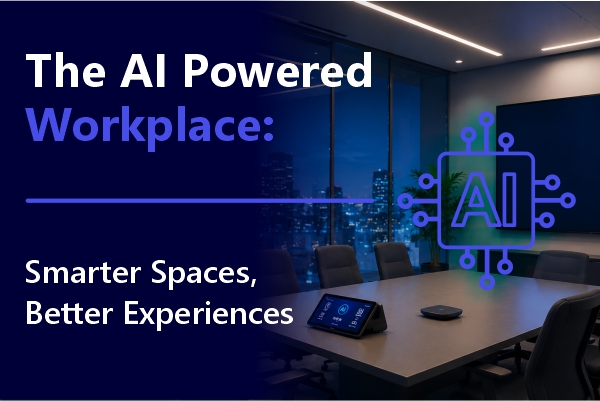
The future of the workplace with AI - an invisible layer of intelligence
Imagine arriving at your office and simply saying, “Start my meeting.” Instantly, an intelligent workplace agent responds. Blinds lower automatically, lighting adjusts to suit the room conditions, displays power on, and conferencing systems connect participants without manual intervention. Using voice recognition and environmental sensors, AI continuously monitors the room, dynamically adjusting camera framing, audio pickup, and acoustics to optimise the experience for both in-room and remote attendees. Instead of users adapting to technology, the technology adapts to the users.
This is only the beginning.
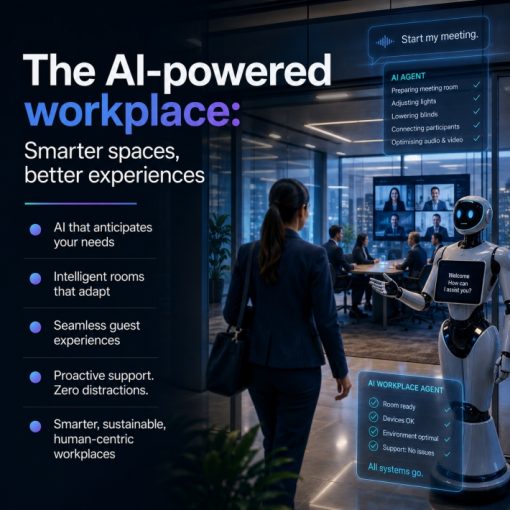
Before the meeting started, another AI agent assessed the room’s readiness. Cameras and IoT sensors verify cleanliness, seating layout, environmental comfort, and device status. If an issue is detected, perhaps a microphone fault, the system automatically raises a support ticket. The room itself becomes self-aware and self-managing.
Through integration with room booking platforms, visitor management systems, and workplace analytics, the space intelligently configures itself based on the meeting type. A presentation can trigger formal lighting scenes, enhanced recording settings, and privacy controls, while a collaborative workshop could prioritise interactive displays and hybrid participation tools.
Simultaneously, AI-powered hospitality services transform the guest experience. A robotic or digitally assisted concierge greets visitors in reception, verifies identities, manages check-in, and escorts guests to the correct meeting space. Along the journey, delegates can request refreshments, adjust room preferences, or access meeting materials, all orchestrated through interconnected AI agents working behind the scenes.
This vision represents the autonomous workplace with environments that anticipate needs, coordinate services, and resolve issues proactively without requiring human intervention.
Organisations that embrace this transformation will create workplaces that are more intelligent, responsive, sustainable, and human-centric. Employees will spend less time managing technology and more time focusing on creativity, collaboration, and decision-making.
The future workplace will not just contain AI. It will operate with AI as an invisible layer of intelligence woven through every interaction, every room, and every experience.
The role of AI in modern meeting rooms
AI is no longer a future concept in meeting spaces, it’s already reshaping how meetings happen. For audio visual technology, AI is quietly powering smarter rooms, seamless collaboration, and frictionless meeting experiences.
Connected intelligence - the new norm for workplace technology
Connected intelligence is the new norm within the modern workplace. Meeting technology such as cameras, microphones, room control systems, and collaboration platforms like Microsoft Teams no longer operate as standalone devices. Instead, they function as part of an integrated intelligent ecosystem that is increasingly responsive, predictive, and personalised.
Today’s smart workplace includes a range of connected technologies with intelligent features to improve experiences:
- Automations in room preparation, where video conferencing equipment, audio, lighting and temperature adjust based on attendee preferences and meeting type.
- Seamless hybrid experiences, with AI cameras, speaker tracking, and collaboration platforms that work in harmony to help remote participants feel equally included.
- Cross-platform meeting insights, combining real-time transcription, engagement analytics, room usage, and automated follow-up emails into a single workflow.
- Proactive workplace optimisation, where data from every meeting helps improve space usage, room design, technology deployment, and employee collaboration experiences over time.
How AI automates processes in meeting spaces
Where AI truly transforms meeting experiences is by creating environments that continuously learn, adapt, and improve every interaction.
Smart display content
AI enhances audio-visual display systems by making content delivery more intelligent, adaptive, and engaging. Displays can respond in real time to activity in the room, automatically optimising layouts, enabling multilingual captions, and personalising content for individual users.
Content generation
AI plays a powerful role in meetings by transforming conversations into instantly usable content from agendas to real-time note generation, and follow-up emails.
Real-time transcription
AI tools can assess who spoke, engagement levels, and conversational tone, providing insights to improve meeting effectiveness and team participation.
Smart scheduling
AI tools and algorithms automate manual tasks such as scheduling and room booking systems. AI integrates with calendars based on attendee availability, needs and equipment preferences. This helps resolve conflicts automatically, tracks occupancy and provides valuable data on how meeting rooms are used.
Visitor check-in
Visitor check-in can be made easy and more secure with facial recognition. AI systems can track attendance and provide insights on room utilisation.
Support and proactive maintenance
One of the most powerful advantages of AI in audio visual integration is predictive maintenance, being able to shift from reactive issue resolution to proactive service. Rather than waiting for faults to disrupt meetings, device health is continuously monitored in real time, so that issues are identified and resolved before users are impacted.
Our support platform, AV Intellicore, uses intelligent monitoring, self-healing processes and automated firmware and security patch management to ensure every asset remains secure, compliant, and performing at its best. Comprehensive reporting and analytics provide deep visibility into the heath of your assets to detect:
- Early indicators of device failure
- Network instability or performance degradation
- Camera, microphone, or peripheral issues
- Overheating, power anomalies, or environmental faults
Our proactive support model significantly reduces downtime, lowers operational support costs, and enhances the reliability and security of your technology estate. Ensure your audio visual environments remain high performing and enjoy the silent running of all your meeting spaces.
Learn more about proactive support and maintenance.
Can your business afford security breaches and downtime? With real-time monitoring and proactive issue resolution, our audiovisual / IT support and maintenance service ensures all your devices stay connected, updated, and operational 24-7.
Copyright © 2026 Display Manager VC. All Rights Reserved.